
AI Could Mean the End for Hollywood's Monopoly.
The printing press, radio, television, cinema. Each time the Church was late. AI cinema is the next door.

It seemed like technology kind of had a lull in advancement rate before these last few years. Think about it. The iPhone came out in 2007. By 2015 or so, the phone in your pocket was already basically the phone in your pocket today. Bigger screen, better camera, same thing. Cars got touchscreens. TVs got thinner. Nothing really changed the shape of life. For about fifteen years it felt like the story of technology was mostly incremental, mostly boring, mostly just the same thing but slightly better.
Then AI hit, and suddenly the ground is moving. Productions that would have required a studio and millions of dollars are on the verge of being made by one or two people with a good computer and a few hundred dollars a month in software. For the first time in a century, the gate is cracking.
Movies were gated for a reason, and the reason was money. Cinema required enormous capital, industrial infrastructure, distribution networks, unions, relationships. Whoever controlled that capital controlled the image, and whoever controlled the image shaped the moral imagination of a century. That is how a mafia forms. Not in the Sicilian sense, in the structural one. A closed circle with the power to decide what gets made, who gets hired, what gets seen, and what gets quietly buried. Remember Weinstein protection network, CAA reporting, to anchor the claim.
For a hundred years, the circle that held the cameras had specific values, and those values were subversive of the culture they were selling to. The mission was to shape a culture that was, to put it plainly, evil. Slow and subtle at first. Then, after enough decades of the drip, the same trend across nearly every production. Strong female lead, man as wreck or buffoon. Catholicism as the only religion you are still allowed to mock. LGBT saturation in every story, not as representation but as catechesis. It is everywhere because it culminated to this point after so many decades of slow drip. The drip became a flood, and now the flood is the water we swim in.
AI has changed what is possible outside that circle. The tools can now produce 4k, ultra-realistic footage, and the consistency problems between shots are being solved in real time. One person with a serious computer rig and a modest software budget can produce a watchable film. The jobs that used to require hundreds of people collapse into three: writing the script, directing the AI, and producing the final edits. These are the three most talent-intensive and least labor-intensive roles in filmmaking, and in theory, one person can do all three. Write. Direct the model. Edit the output. The floor has dropped by orders of magnitude.
The current state of AI cinema is mostly slop. That is true and worth saying. But the top talent is already showing what the tools are capable of, and the trajectory is not subtle. In five years the question will not be whether AI cinema is watchable. The question will be what kind of stories get told with it.
The printing press opened a door, and the Reformation walked through it before the Catholic Church did. Radio opened a door, and the Church was late. Television opened a door, and the Church was late. Cinema itself opened a door a hundred years ago, and the Church was, with a few rare exceptions, late and bad at it. It was simply never built to be a propaganda machine in the narrow modern sense. The pattern is real. The question is whether this time will be different.
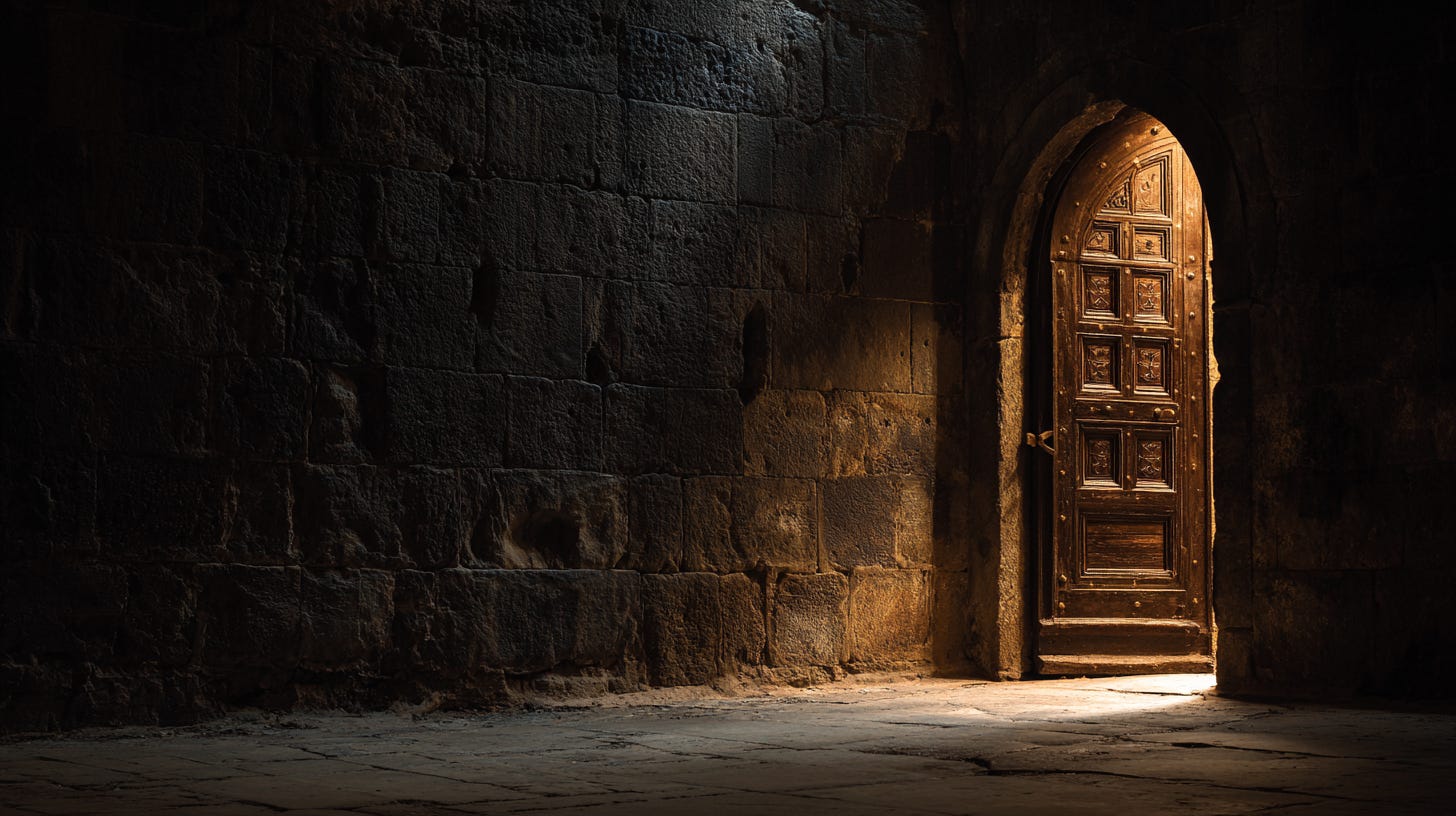
Catholics have an opportunity to meet this challenge and be at the forefront. To create the most serious aesthetic art, as we once did, for a civilization that built Chartres, commissioned Caravaggio, and wrote the Divine Comedy. We can make serious work here. Work that changes lives. Work that spreads the gospel. But if Catholics walk through the door with the same low-bar sensibility that has defined most Christian film for the last forty years, the door will close, and someone else will have walked through.
The door is open. History suggests doors like this close. The question is not whether the technology will be used, it will be, and it will eventually be accepted. People scoff at AI cinema as a concept now. In ten years it will be ordinary, the way digital cameras replaced film and streaming replaced cable. The only question is who is making it when that moment arrives.
Catholics should not be reactionary. We should not reject new technologies on instinct. We should take them up and use them for the purposes of God, knowing that God can use everything for the good. The instinct to reject the new tool because the wrong people built it first is the same instinct that kept the Church late to the printing press, late to radio, late to cinema. Let us not be late again.
Do those who follow Christ, who hold to the truth and to the traditional teachings, have a story to tell? I think we do. I think we have some art to make. We know what beauty is. The brutalist can build his buildings. The modernist can build his soulless square houses. We will build beauty. And as much as the other side tries, beauty will always win over their ugliness in the end, because beauty is not a style. Beauty is a consequence of telling the truth.
Here is where the word propaganda needs to be recovered. The term is poisoned in modern English, but its origin is Catholic. The Congregation for the Propagation of the Faith, Congregatio de Propaganda Fide, was established by the Holy See in 1622 to coordinate the spread of the Gospel. Propaganda, in its original meaning, simply means the propagation of something. The thing propagated is what makes it good or evil. The mafia that held the cameras for a hundred years propagated lies, ugliness, disturbance, and evil. Catholics now have the tools to propagate the opposite. Truth instead of lies. Beauty instead of ugliness. Life instead of disturbance. Good instead of evil.
The door is open. Let us not be left behind.