
The World Has Become Cheap. Do Not Compete in a Race You Cannot Win.

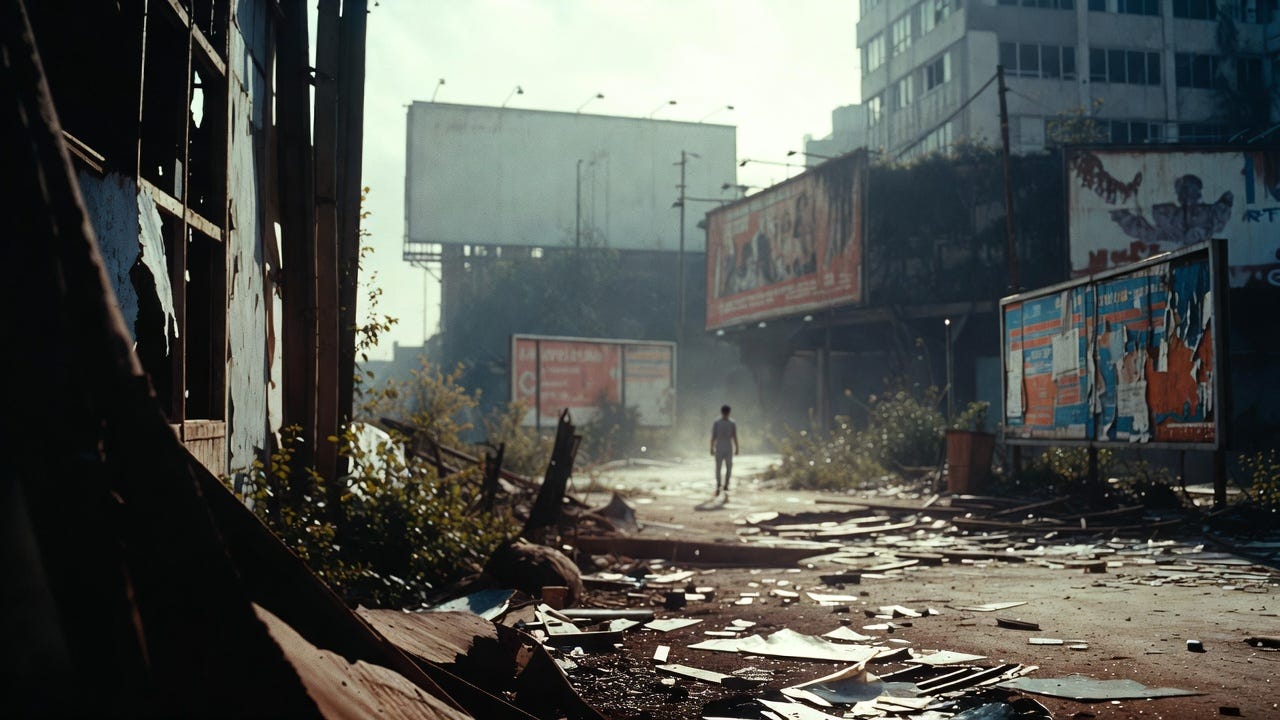
The modern world is collapsing into cheapness.
Not merely in price, but in meaning, quality, dignity, and purpose.
Everything is being optimized downward. Labor. Craft. Relationships. Food. Culture. Even human attention. We are living through a race to the bottom, and most men have been tricked into believing they must compete in it.
They cannot win.
And even if they could, the victory would be grotesque.
The End of Craft and the Lie of Optimization
Mass production rendered the craftsman obsolete. Plastic replaced permanence. Industrial agriculture replaced stewardship. Convenience replaced competence.
The modern economy does not reward excellence. It rewards scalability, speed, and disposability.
To survive within this system, a man must become a cog. He must specialize narrowly, reduce himself to a function, and accept a life optimized for efficiency rather than fulfillment.
Optimization sounds intelligent. In reality, it hollows life out.
A story illustrates this perfectly.
A friend once told me about his father, a successful professional who billed clients at an extremely high hourly rate. He owned a waterfront home. He had a boat on a private lift. He had perfect access to fishing, no trailers, no ramps, no inspections, no inconvenience.
Yet he never used it.
Why? Because by his calculation, it was not optimal. The time spent fishing cost more than buying a perfectly prepared fish at a restaurant. From a strictly economic perspective, he was correct.
But something essential had died.
When every activity is evaluated by monetary efficiency, joy becomes irrational. Skill becomes wasteful. Production becomes inferior to consumption.
This is the terminal logic of optimization.
At a certain point, the optimal life is one in which you do nothing, create nothing, build nothing, and own nothing. You outsource every human activity to a system that strips it of meaning and returns it to you as a sterile product.
Why Competing Is Futile
You cannot compete with industrialization.
You cannot compete with factory farming.
You cannot compete with outsourcing.
You cannot compete with artificial intelligence.
Attempting to do so forces you into dependency. You lower your prices. You accept thinner margins. You sacrifice quality. You surrender autonomy.
AI is not merely another competitor. It is the final iteration of this logic. It accelerates the race to the bottom until human labor itself becomes surplus.
If you try to remain competitive within this paradigm, you will end up dependent on corporations, platforms, and eventually governments for survival. You will live inside a managed system that provides for you just enough to keep you docile.
This is not prosperity. It is soft captivity.
Production Is the Source of Meaning
Fulfillment does not come from consumption. It comes from production.
To produce food, shelter, tools, skills, and culture is to participate in creation. To rely entirely on systems you do not control is to exist as a client rather than a steward.
The modern economy has made production appear irrational. Why grow food when it is cheaper to buy it? Why repair when replacement is cheaper? Why build when renting is easier?
But cheapness conceals fragility.
The moment supply chains fracture, currencies inflate, or systems fail, the man who produces nothing becomes helpless. The man who produces even a little becomes powerful.
This is why land matters.
Land Is Not an Asset. It Is Autonomy.
Land is not valuable because it is scarce. It is valuable because it produces life.
Land produces food.
Food produces independence.
Independence produces freedom from coercion.
A man who can feed his family cannot be easily threatened.
As jobs disappear and currencies erode, land will remain the final store of value. Not because it appreciates financially, but because it sustains existence.
Land cannot be fully optimized. It resists abstraction. It demands labor, patience, and stewardship. It anchors a man in reality.
This is precisely why it is dangerous to systems built on dependence.
Opting Out Is the Only Rational Strategy
Catholic men must stop trying to win a game designed to make them lose.
The solution is not protest. It is withdrawal. Not cowardly retreat, but intentional separation.
You must think in civilizational terms.
Every civilization has borders. Every household must become a domain. To opt out of a collapsing system, you must build a parallel one.
Land is the buffer. The household is the unit. Production is the foundation.
When you produce your own food, you are insulated from inflation. When you build your own shelter, you are insulated from debt. When you raise children who can work, create, and contribute, they become assets rather than liabilities.
This is not regression. It is restoration.
Work Was Never the Problem
Work existed before sin.
Adam worked in the Garden of Eden. Labor was originally harmonious, aligned with creation. There was no resistance between intention and outcome. Provision was guaranteed. Work was stewardship, not survival.
The Fall did not introduce work. It introduced friction.
Thorns and thistles symbolize resistance. Time became pressure. Labor became anxious. Survival replaced abundance.
Modernity has not healed this curse. It has amplified it. By severing men from land, craft, and household production, it has transformed work into abstraction. Labor no longer sustains life directly. It feeds systems.
The result is alienation.
Building a Household Civilization
The answer to technocracy is not political salvation. It is domestic sovereignty.
A Catholic household ordered toward God, rooted in land, free from unnecessary debt, producing its own sustenance, and raising disciplined children is a direct threat to the modern order.
Not because it rebels loudly, but because it does not need permission.
Christians have always withdrawn when empires became hostile. Monasteries preserved civilization during Rome’s collapse. Rural households preserved faith while cities decayed.
Withdrawal is not escapism. It is preservation.
Do not wait for institutions to save you. Do not place hope in subsidies, programs, or digital salvation. Control what you can control.
Build land. Build skill. Build household. Build continuity.
The world is becoming cheap. Do not compete in cheapness.
Build something that cannot be optimized away.