
Why Single-Skill Specialization Is Over

The enemy must be named clearly from the beginning.
The enemy is not AI.
The enemy is not globalization.
The enemy is not recession.
The enemy is one job, one skill, one income, and the economic dependence that follows from it.
That model is ending.
The Collapse of the Specialization Economy
For the last century, men were trained for specialization.
Pick one skill.
Attach it to one job.
Extract one income.
Build a life around that dependency.
This only worked because the industrial economy was stable, margins were protected, and skills were scarce.
That world no longer exists.
Artificial intelligence is accelerating job loss, but more importantly, it is collapsing economic insulation. Businesses are forced to lower prices. Margins are thinning across industries. Liquidity is disappearing. Even businesses that survive will operate with far less tolerance for error.
In a shrinking economy, specialization becomes fragility.
When one skill fails, the entire livelihood fails.
What This Leads To If Unaddressed
If a man remains dependent on a single specialized function, several things become inevitable:
Job displacement or wage compression
Inability to afford outsourced services
Loss of resilience during downturns
Increasing debt dependence
Declining autonomy
This is not theoretical. It is already visible.
Expect harder times. Expect reduced purchasing power. Expect to do more yourself, not because you want to, but because you must.
The AI Paradox
Here is the paradox most people miss.
AI creates the problem, but also delivers the solution.
This happens in three ways:
Knowledge democratization
Skills that once required apprenticeship, guild access, or professional gatekeeping are now publicly accessible.Learning acceleration
With AI and video instruction, the cost of acquiring competence in any trade or skill has collapsed.Capability expansion
A single man can now do what previously required multiple specialists.
AI destroys the value of exclusive specialization, but massively increases the value of capability stacking.
Why Single-Skill Trades Will Still Suffer
This does not mean trades are worthless. It means exclusive dependence on one trade is dangerous.
As skills become accessible, consumers become more capable. When people can repair, build, maintain, and diagnose themselves, demand for outsourced labor softens. Rates fall. Competition increases.
The mechanic who only fixes cars becomes vulnerable.
The carpenter who only frames houses becomes exposed.
This is not an insult to trades. It is a structural reality.
The man who wins is not the specialist.
The man who wins is the producer.
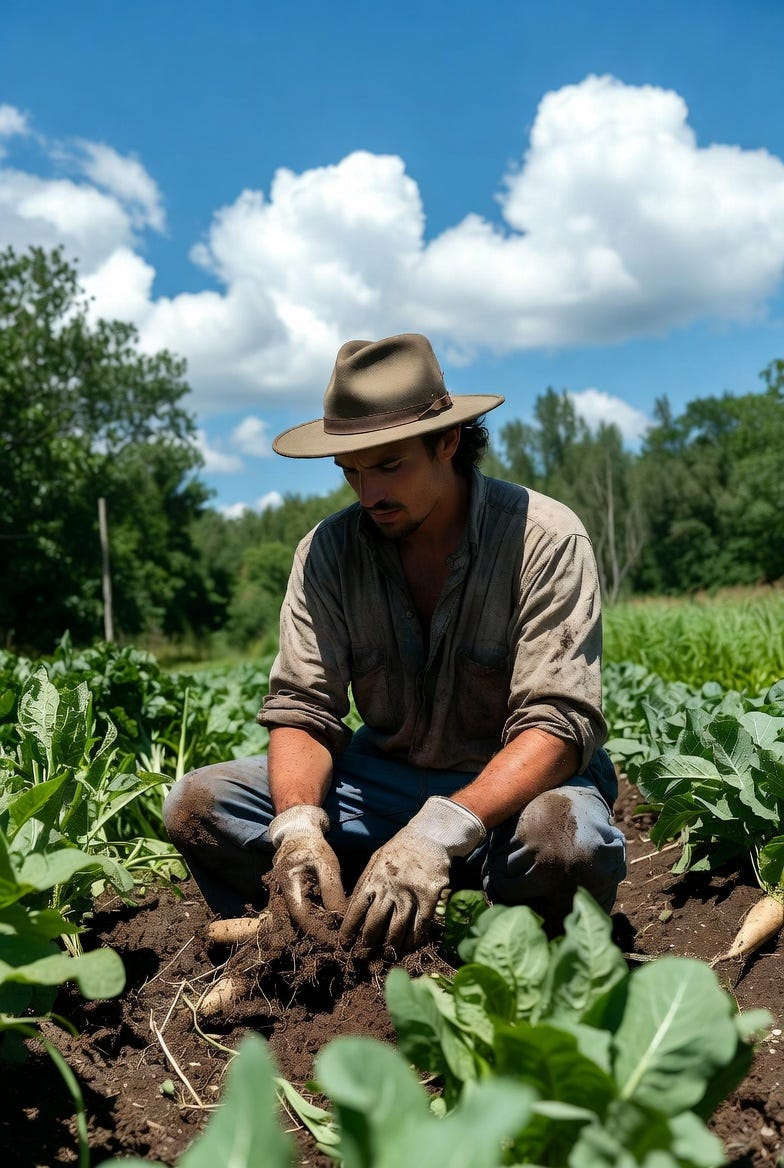
The New Archetype: The Patriarch Household Producer
What replaces the old model is not chaos. It is a return.
The archetype I am advocating is the Patriarch Household Producer.
This man:
Is not dependent on one income
Produces value directly from land, skill, and enterprise
Stacks competencies across domains
Builds systems, not careers
Reduces reliance on external services
Creates resilience for his household
He is not anti-technology.
He uses technology to reclaim autonomy.
Skill Stacking Is the New Security
Skill stacking means combining:
Productive labor
Maintenance competence
Entrepreneurial output
Digital leverage
Physical production
A man who can grow food, repair equipment, build structures, manage systems, and sell directly is insulated from collapse.
He does not need a perfect economy to survive.
He does not need institutional permission.
Production Replaces Employment
As jobs disappear, the only durable value left will be what you can produce.
Land becomes central because it enables:
Food production
Asset control
Cost elimination
Intergenerational inheritance
Production restores dignity. Employment increasingly removes it.
The Final Prescription
Do not cling to specialization.
Do not wait for stability.
Do not anchor your life to one income stream.
Instead:
Stack skills deliberately
Reduce dependence aggressively
Learn continuously using AI and open instruction
Acquire productive land if possible
Build systems that serve your household
Think like a producer, not an employee
The future belongs to capable men, not credentialed ones.
Specialization is not dead.
Dependence is.